How Hidden Lantern Coffee Became the Coziest Café in Town
When you first push open the glass door at Hidden Lantern Coffee, it doesn’t feel like walking into a café. It feels like stumbling into a living room that just happens to smell like freshly ground beans and warm sugar. There are no neon signs shouting for attention, no gleaming chrome counters trying to impress you. Instead, there’s a small brass bell that chimes softly above the door, a lamp-lit room that glows like late afternoon, and a barista who looks up, actually meets your eyes, and says, “Hey, welcome in.”
Hidden Lantern didn’t become the coziest café in town by accident. It happened through a series of small, almost invisible choices—the kind you don’t notice individually, but you feel all at once.
The Space That Feels Like a Secret
The café sits half a block off the main street, tucked between an old bookstore and a tailor’s shop that’s been there for decades. It’s easy to miss if you’re not looking for it, which is precisely the point. The owners, Lena and Mark, never wanted a place that shouted for foot traffic; they wanted one that you had to find.
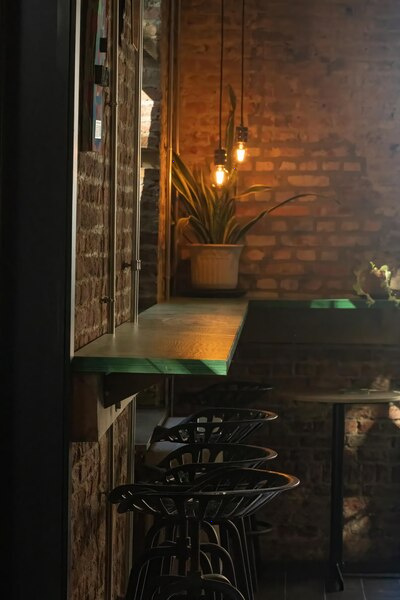
Inside, there’s no overhead fluorescent lighting. Instead, a cluster of mismatched lamps—some thrifted, some inherited—casts pools of warm light across the room. In the late afternoon, the bulbs blend with streaks of natural sunlight slipping in through the front windows. There’s no harsh spotlight, no Instagram wall demanding a photo, just soft corners and shadows that make you feel instantly at ease.
The tables don’t match. Some are scarred farmhouse wood, others old school desks, one a restored sewing table with an iron treadle still intact. The chairs creak. The floorboards groan in all the right places. Every element quietly reminds you that other people have sat here, thought here, worked here, rested here.
Hidden Lantern understands a subtle truth: comfort rarely arrives in straight lines and shiny surfaces. It shows up in slightly uneven edges, in the feeling that things have existed before you and will exist after you, and that you’re welcome to be part of the in-between.
Sound as a Kind of Hospitality
You notice the sound next. Or, rather, the lack of certain sounds. There’s no blaring music, no overcompensating playlist. What you hear instead is a murmur:
- The soft hiss and sigh of the steam wand.
- The low hum of conversation.
- The occasional clink of ceramic against wood.
- A gentle soundtrack—jazz on rainy days, acoustic on bright ones—played just loud enough to soften the room, not fill it.
Lena once said that they treat sound like another piece of furniture. It needs to belong in the room without calling attention to itself. That’s why there’s no television, no aggressive announcements, no shouting out drink names. When your order is ready, they walk it over to you, say your name quietly, maybe ask how your day is going.
This approach turns noise into a kind of invisible comfort. You can open your laptop and focus. You can meet a friend and talk for hours. You can sit alone with a book and never feel like you’re competing with the room for the right to exist there.
The Smell of Memory
Cozy spaces almost always have a signature scent. Hidden Lantern leans into this gently, without artificial tricks. The smell of coffee is foundational, of course—beans ground to order, espresso pulled in steady rhythm. But it’s the baking that seals the experience.
Behind the counter, a narrow doorway leads to a kitchen where cinnamon and butter seem to live permanently in the air. They bake in small batches, several times a day, not for efficiency but for continuity. Every couple of hours, the smell shifts: morning scones giving way to banana bread, then to cardamom buns and chocolate chip cookies by late afternoon.
For regulars, these scents become time markers. You know it’s early if you walk in to the smell of orange-zest brioche. You know you’re creeping into evening when the kitchen goes quiet and the darker, deeper coffee notes take over. Comfort accumulates in these predictable rhythms.
Lighting and the Art of Staying
The difference between a café you visit and a café you stay in often comes down to light. Hidden Lantern is intentionally dimmer than most, but never gloomy. They think in layers: window light by day, lamps by evening, candles on tables when the sun slips away in winter.
There’s a deliberate absence of harsh blue light. Laptop screens are the brightest things in the room, and even they seem gentler against the warm background. This low, amber glow slows you down. It makes you want to order a second drink, to linger over your last page, to write one more paragraph.
By night, the café lives up to its name. The lamps, many with fabric shades or patterned glass, scatter light in imperfect, comforting circles. Corners feel private but not isolated. You can be alone without being lonely.
Furniture That Invites You to Exhale
Most cafés are designed around turnover. Hidden Lantern is designed around presence.
A sagging leather sofa anchors the back wall. A pair of wingback chairs claim the sunniest spot by the window. A long communal table sits in the middle, a quiet invitation to students, freelancers, and anyone who likes the company of strangers.
The seats are soft where they need to be, firm where they should be. The tables are spaced just enough that you can have a private conversation without having to whisper. There are hooks for bags under the bar, outlets placed thoughtfully, not grudgingly. Small side tables next to armchairs make room for both a mug and a notebook.
Cozy isn’t an accident of décor; it’s a feeling of being physically considered. Someone thought about your posture, your laptop charger, your need to set a book down without balancing it on your knee.
The Ritual of the Menu
On paper, Hidden Lantern’s menu isn’t revolutionary: espresso drinks, pour-overs, teas, a modest list of baked goods and light bites. But the way it’s offered and served turns ordering into a small ritual rather than a transaction.
The baristas ask questions like, “Do you want something bright and citrusy, or deeper and chocolatey?” They remember that you take oat milk when you forget to mention it. They steer you gently away from a choice that might disappoint you and toward something you’ll love, often with a quiet, “Can I make a suggestion?”
The drinks themselves lean into comfort without becoming cloying:
- A honey-cardamom latte that tastes like a blanket in a mug.
- A seasonal maple cappuccino that arrives with a faint, smoky sweetness.
- A classic, perfectly pulled cortado for those who want clarity more than indulgence.
Even the mugs matter. There are no paper cups unless you specifically ask to take something to go. Ceramic mugs are thick enough to hold heat, thin enough at the lip to feel pleasant. Some are handmade by a local potter; all are sized to encourage you to drink slowly.
The Human Ingredient
What truly makes Hidden Lantern the coziest café in town isn’t the furniture or the lighting, but the way it makes you feel seen without being watched.
The staff learn names, but more importantly, they learn patterns. They figure out which customers crave conversation and which ones clearly came for quiet. They practice a kind of soft presence: available, kind, attentive, but never hovering.
A first-time visitor might be gently asked, “Have you been in before? Want me to walk you through what we do?” A regular will be greeted with, “Your usual, or are we trying something new today?” The tone is always casual, never scripted.
They notice small things. A rain-soaked guest gets a towel and a joke: “New membership tier—‘just survived a downpour.’ Perks include dry napkins.” Someone who looks overwhelmed is offered water before they’re asked for an order. A laptop user searching for an outlet will find an extension cord already in motion.
In a town full of places that serve coffee, Hidden Lantern serves the feeling of being quietly looked after.
A Café That Belongs to Its Neighborhood
Part of the café’s coziness comes from the way it reflects the community around it. The bulletin board by the bathroom is a gently curated collage of local life: hand-lettered flyers for book clubs, piano lessons, poetry readings, lost cat notices, and weekend markets.
There’s a small shelf of books with a handwritten sign: “Borrow, trade, or just read while you’re here.” Many titles bear notes on the inside covers: “Finished this on a rainy Tuesday—hope you love it too,” or “From one exhausted grad student to another.”
On certain evenings, the café shifts quietly into an event space. A folk singer might perform in the corner, no stage, just a borrowed stool and a microphone. A local writer might read a story to a room full of people sipping lavender tea and hot chocolate. The events are never so large that they overwhelm the space; they feel more like extended living-room gatherings than shows.
All of this turns the café into more than a place that sells coffee. It becomes a place where the town sees itself in miniature, where people notice one another, where the pace of life resets to something more human.
Time Behaves Differently Here
In many modern cafés, speed is the selling point: mobile orders, quick pickups, “no need to wait.” Hidden Lantern chose the opposite metric. It’s proud of being a place where time stretches.
You might come in for ten minutes and stay for an hour without quite realizing it. You might watch the light change across the room and feel oddly grateful just to have witnessed it. You never feel rushed out, even when your mug has been empty for a while. Refills are offered as suggestions, not sales tactics.
The café’s unofficial motto, scribbled in chalk near the register, puts it plainly: “Stay as long as you need.” And people do. Breakups happen in the corner booth. Job offers are accepted over hot chocolate. Novels are quietly finished under the window. The staff have witnessed tears, laughter, reunions, and long, healing silences.
Cozy, in this context, is not just about comfort; it’s about safety. Hidden Lantern has become a place where people feel safe enough to be themselves, unhurried and unedited.
The Power of Small, Consistent Choices
Hidden Lantern didn’t become the coziest café in town through one grand gesture or a single stunning design feature. It got there by caring, relentlessly, about the smallest details:
- The gentler lighting choice.
- The slower, more generous smile.
- The ceramic mug instead of paper.
- The extra beat taken to ask how your day is going—and mean it.
- The willingness to let you sit, undisturbed, for as long as you need.
In a world that often celebrates the biggest, the fastest, the loudest, Hidden Lantern chose to be something else: a quiet, steady heartbeat in the middle of town. The kind of place you think of on cold mornings and difficult afternoons. The kind of place you recommend not with a flashy review, but with a soft, “I know somewhere you might like.”
That’s how Hidden Lantern Coffee became the coziest café in town—not by trying to be everywhere for everyone, but by becoming exactly what so many people didn’t realize they were missing: a warm, unhurried corner of the world where you can simply come in, sit down, and belong.